
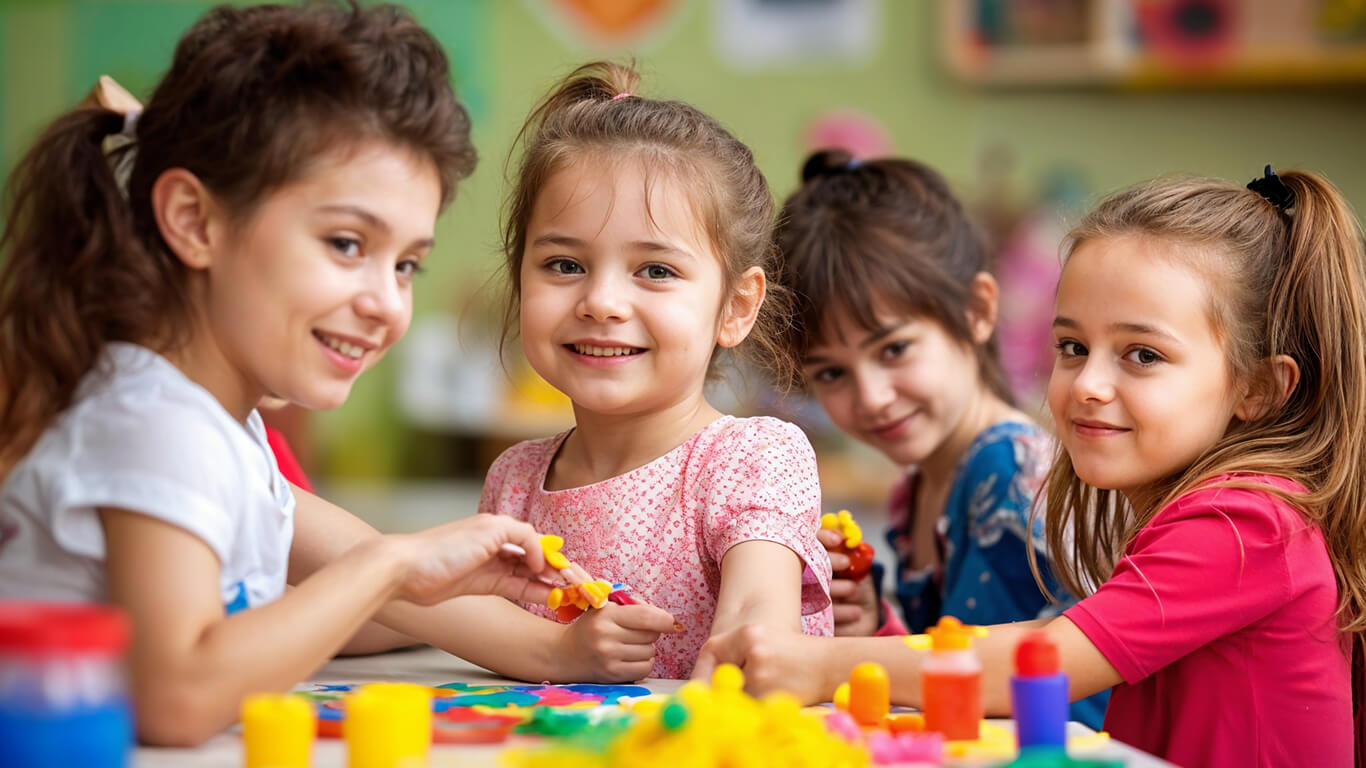
Play is a natural and powerful way through which young children learn about the world around them. In early childhood, learning does not happen only through books or instructions, but through hands-on experiences that spark curiosity and imagination. Play allows children to explore ideas freely, experiment without fear, and develop essential skills in a joyful and stress-free environment.
When children engage in play, they actively use their senses, emotions, and thinking abilities. Whether building with blocks, role-playing with friends, or exploring nature, play strengthens brain development and encourages independent thinking. These experiences lay the foundation for lifelong learning and healthy development.
Play is not just entertainment for children—it is their way of learning, understanding emotions, solving problems, and building confidence in themselves and their abilities.
Through play, children learn to communicate, cooperate, and express their feelings in healthy ways. It supports emotional well-being by helping them manage stress and build self-esteem. Physical play improves coordination, strength, and overall health, while creative play enhances imagination and innovation.
How play supports early childhood development
Play-based learning encourages children to take an active role in their own growth. It allows them to learn at their own pace, make choices, and understand consequences in a safe and supportive environment.
- Play helps develop cognitive skills such as thinking, memory, problem-solving, and decision-making.
- Social play teaches children cooperation, sharing, communication, and respect for others.
- Emotional development is strengthened as children learn to express feelings and manage emotions.
- Creative play boosts imagination and encourages innovative thinking from an early age.
- Physical play improves motor skills, balance, coordination, and overall physical health.
By embracing play as a core part of early education, we allow children to grow naturally into confident, curious, and capable learners. Play builds strong foundations that support academic success, emotional resilience, and a lifelong love for learning.